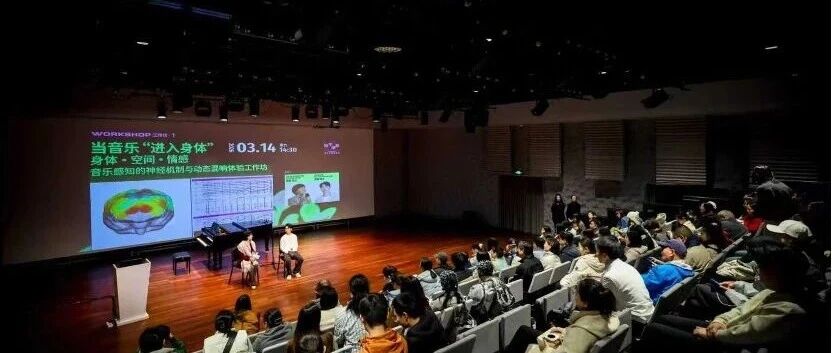
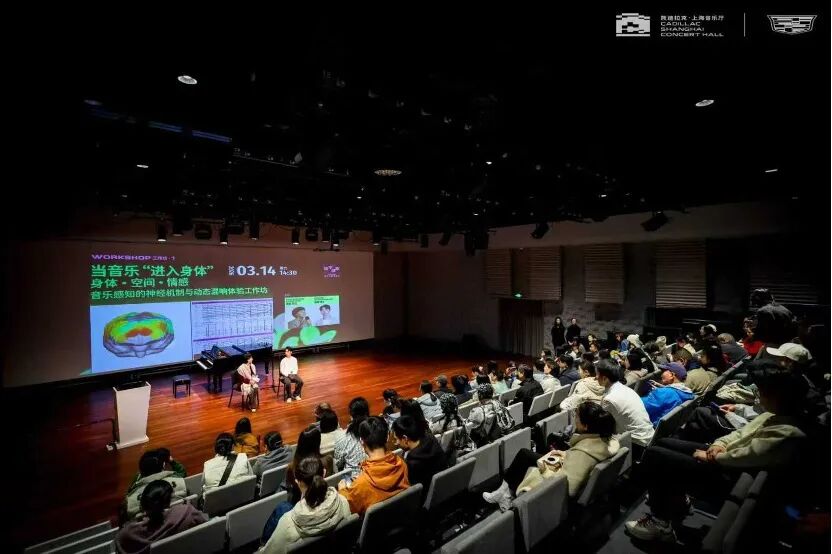
On the afternoon of March 14th, as an important part of the “2026 Digital Muse-Music Technology Innovation Festival” hosted by Cadillac Shanghai Concert Hall, the first cross-border workshop “Neural Mechanisms of Music Perception and Dynamic Reverberation Experience” was successfully held in the B2 Music Cube of the concert Hall.
This workshop was jointly delivered by Dr. Huang Juan, head of the Music Brain Science Research team of the Brain and Intelligence Laboratory of Tsinghua University, and Dr. Gao Nan, a young teacher of Xi’an Conservatory of Music. Through the rigorous process of “scientific lectures + piano performance + live experiments”, the audience was led to redefine music perception from the dimensions of neuroscience and digital acoustics, and in particularEmphasize the necessity of carrying out scientific experiments in professional concert halls.
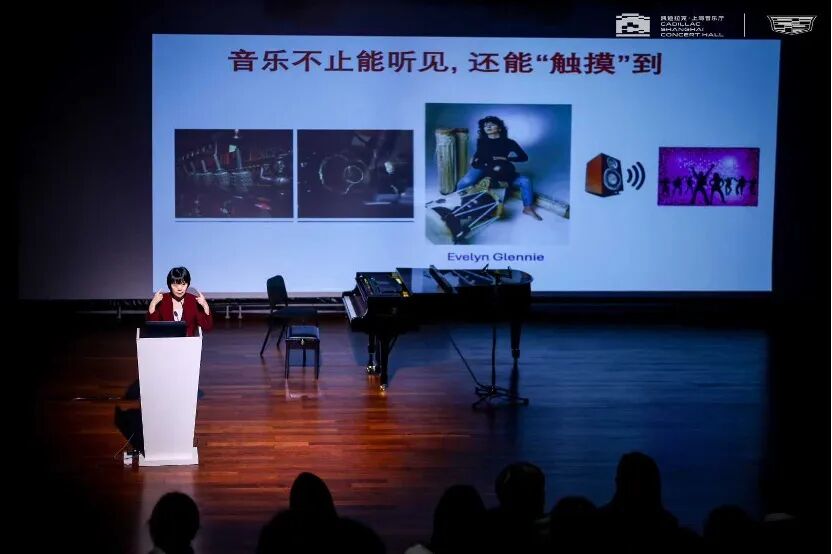
Dr. Huang Juan, head of the music Brain Science Research team at the Brain and Intelligence Laboratory of Tsinghua
University, Dr. Huang Juan said in a lecture that compared with a controlled laboratory environment, the professional sound field and complex environment provided by the concert hall can more truly simulate the multi-sensory integration process of human artistic appreciation, enabling researchers to observe more accurately.How spatial cues (such as reverb, sense of distance, and sense of encirclement) change individual feelings in real time. This research paradigm of “out of the laboratory” has important scientific research value for revealing specific cognitive mechanisms and developing listener-centered music regulation techniques. She further pointed out that this workshop is not only a scientific experiment, but also a practical field for in-depth collaboration between artists, concert halls, audiences and neuroscientists. By conducting experiments in real concert situations, researchers can directly obtain the audience’s perceptual and neurophysiological response data in the natural listening state, thus breaking through the limitations of traditional laboratory research on ecological effectiveness.
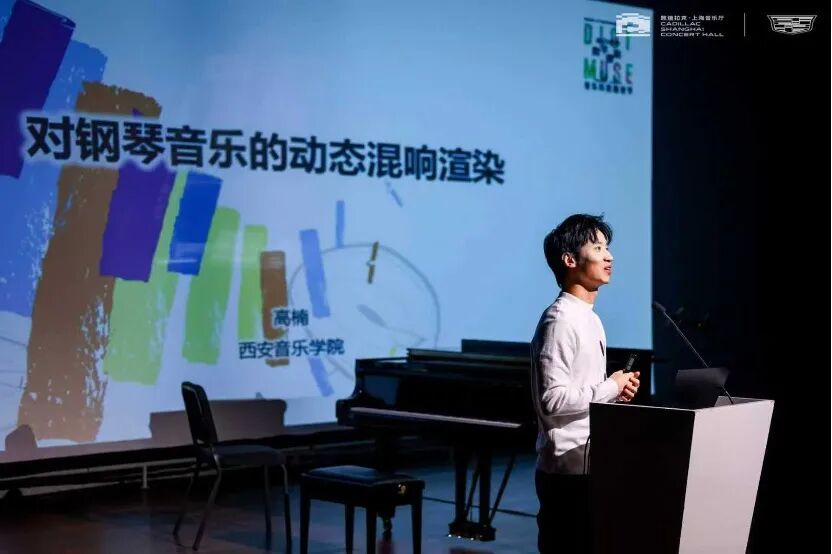
Dr. Gao Nan, young teacher and Music engineer of Xi’an Conservatory of Music
Dr. Gao Nan introduced the potential of dynamic reverb in the shaping of music space and the regulation of subjective perception and the preliminary research results during his PhD at Communication University of China, and invited the audience to listen to Schumann’s “Carnival” and “Chopin”, Zhou Yuxue’s “Rain” and Liszt’s “The Devil” in comparison.After the normal version and the dynamic reverb version of the first piano piece, multi-dimensional subjective experiences such as atmosphere, immersion, and spatial expansion were scored. During the experimental session, while the pianist was playing on the stage, the acoustic research team regulated the dynamic reverb parameters in real time, and simultaneously recorded the audience’s near-infrared brain function imaging data, skin electricity, ECG and many other physiological indicators.
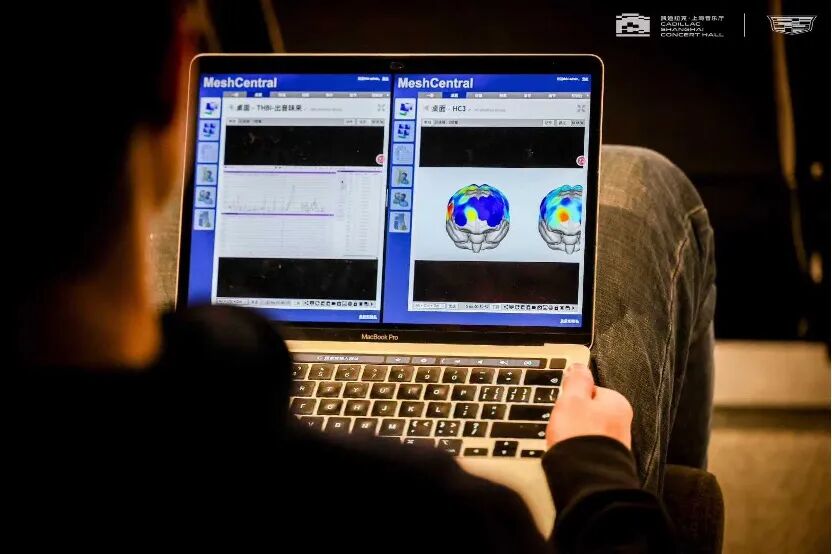
The music brain science research team conducted near-infrared brain function imaging
on-site. In follow-up exchanges with the audience, Dr. Huang Juan mentioned that in the real performance space of the concert hall, the audience’s perceptual behavior, brain activity and physiological response are measured synchronously, which represents a new direction of neuroscience for natural scenes.. This kind of research not only has higher ecological effectiveness, but also provides a new path for understanding the dynamic social information interaction between musicians, performance spaces and audiences, making it possible to decipher the subjective state of consciousness, sociality and situational processing in music.
Dr. Gao Nan mentioned that this workshop brought a new dynamic immersive music experience to the audience, and verified the feasibility of music interpretation in professional concert halls from “fixed acoustic conditions” to “active creative elements”. Such field experiments in concert halls have both scientific value and practical significance, and provide a new development direction for the integration of music technology, brain science and performing arts.
In the future, the music brain Scientific research team of the Brain and Intelligence Laboratory of Tsinghua University will continue to promote multi-modal research on behavior and neurophysiology in the real concert hall environment, and explore the role of music in regulating the state of consciousness and social interaction.
On-site
contribution to the workshop | Shen Yiyang
Audit | Wang Xiaoqin, Guan Weijie

Leave a Reply