

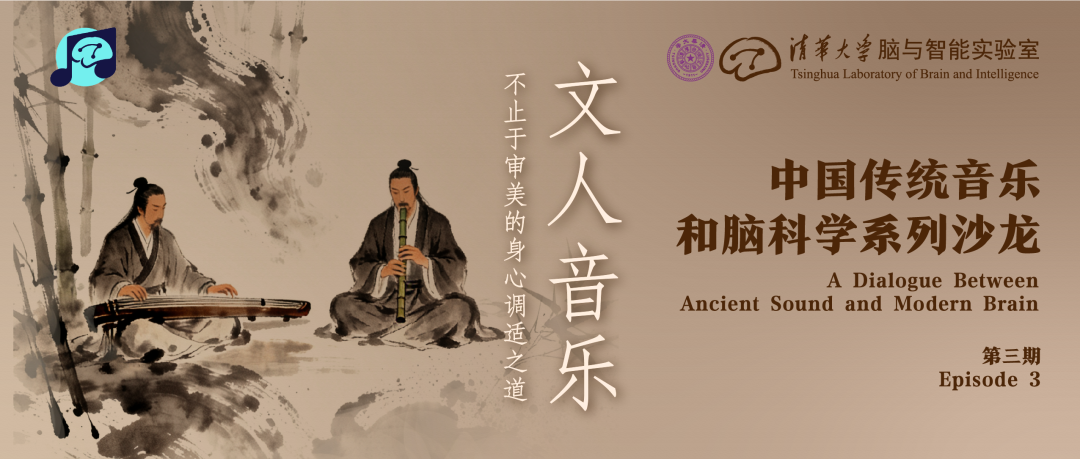
In traditional Chinese culture, music is not an object of passive acceptance or instant consumption, but a way of practice embedded in daily life. The composition of qin, books, paintings, and tea is not an isolated art category, but a setof overall life systems used to settle the body and mind, regulate emotions, and construct the relationship between man and the world.
On December 20, 2025, the “Dialogue Salon between Traditional Chinese Music and Brain Science · Literati Music: The Way of Physical and Mental Adjustment beyond Aesthetics” hosted by the Brain and Intelligence Laboratory of Tsinghua University was held in Tsinghua Park. Starting from the scene of immersive literati life, this event systematically presents how a laboratory raises scientific questions about music, physical and mental adjustment, and brain mechanisms in the public domain through the intertwining of artistic practice and scientific dialogue.
More importantly, this salon is not only a cross-border dialogue, but also a “public research practice” carried out in the real music scene: the laboratory team carried out multi-modal brain and physiological data collection without destroying the integrity of the art, trying to record music in the “listener—The state change caused by the ”player” on both sides switches with the neural network.
The life scene of the literati music in the Shu Mo Qin Tea Room was “re-lit” on the stage
. 1. From the “life scene” to the research problem: the perceptual layout of the Shu Mo Qin Tea Room
The opening of the salon did not directly enter the discussion, but through the overall presentation of “Shu Mo Qin Tea”, a perceptual environment similar to the daily life of traditional literati was constructed. The dance beauty design was designed by Lu Xiangcheng, a postdoctoral fellow of Shuimu Scholars in the Department of Philosophy of TsinghuaUniversity;Zhou Tao, a postdoctoral fellow of the Academy of Fine Arts of Tsinghua University,painted on the scene; Guqin playerXie Juanperformed “Pingsha Luoyan” and “Drunk Fishing Singing the Evening” in turn,Jiang Weihuaplayed “God and Man Chang”, and tea artistGuoLuxing performed “Pingsha Luoyan” and “Drunk Fishing Singing the Evening” in turn.Tea in the meantime.
This paragraph is not a “performance”, it is more like astate of perception and attention: the audience is not required to understand the structure or historical significance of music, but is placed in alow-significance, low-stimulation density, and slow-pacedmulti-sensory environment. As the host, Dr. Huang Juan, head of the music Brain Science team of the Brain and Intelligence Laboratory of TsinghuaUniversity, pointed out in the opening: “In traditional China, music does not start on the stage, but occurs naturally in life. ”
From the perspective of the laboratory, this design itself corresponds to a key question: whenthe intensity of external stimuli decreases and the time structure is stretched, what kind of systematic changes will occur in human attention and physical and mental state?
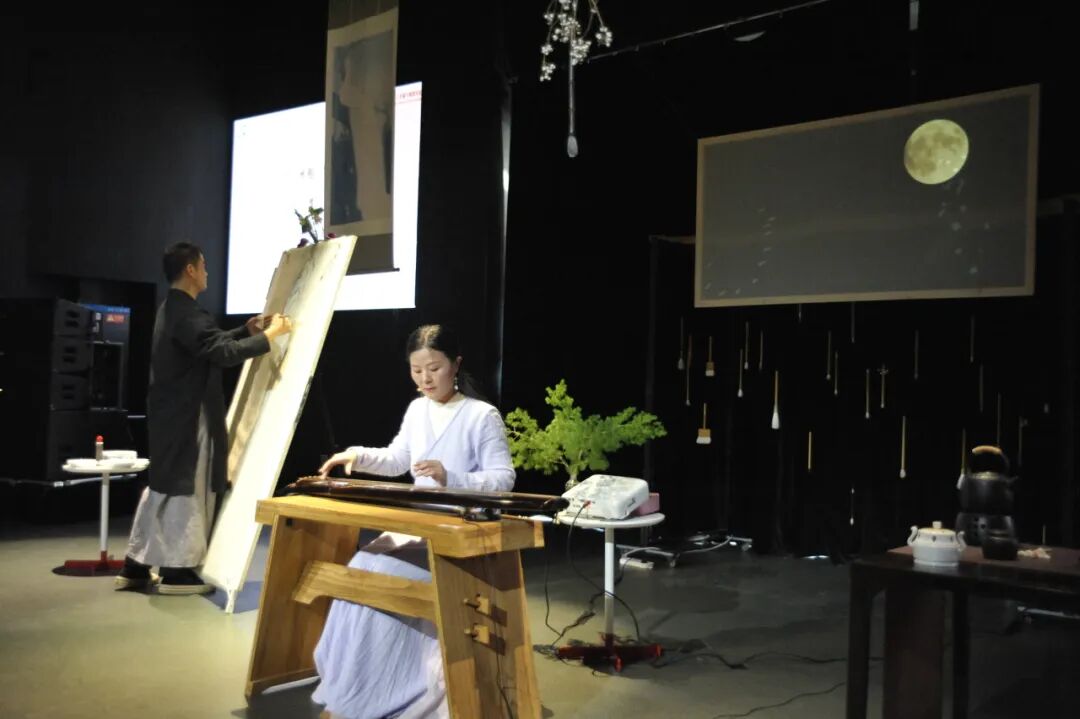
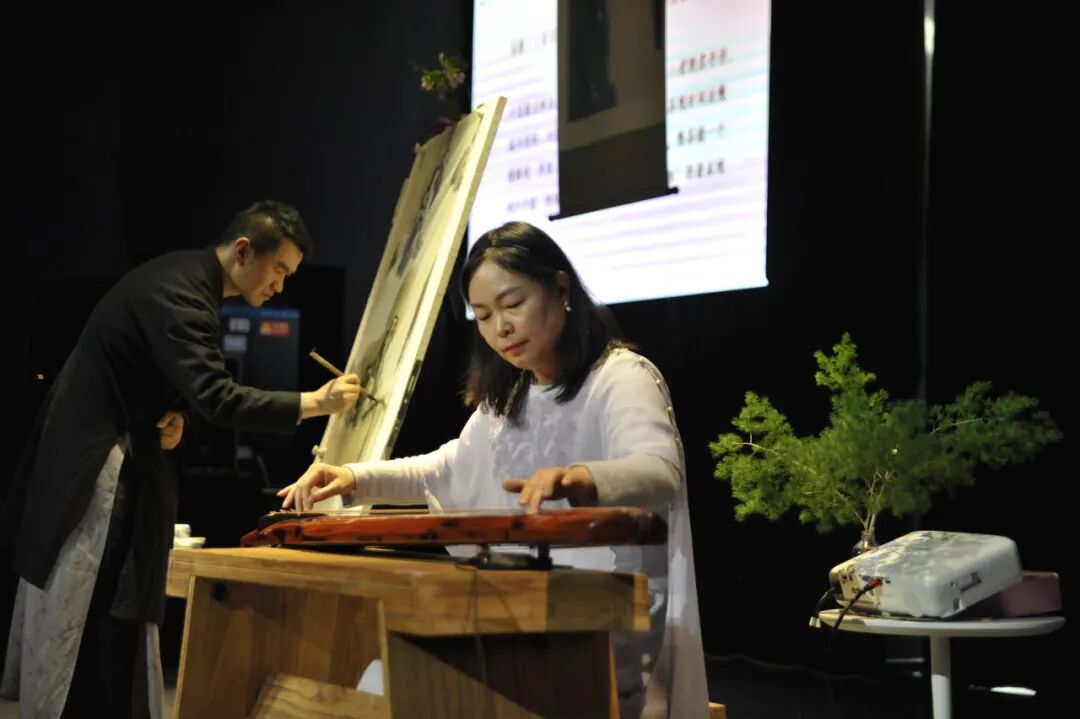
Calligraphy and painting on the spot, guqin playing
, ink color and Qin sound in parallel: time is slowed down at this moment
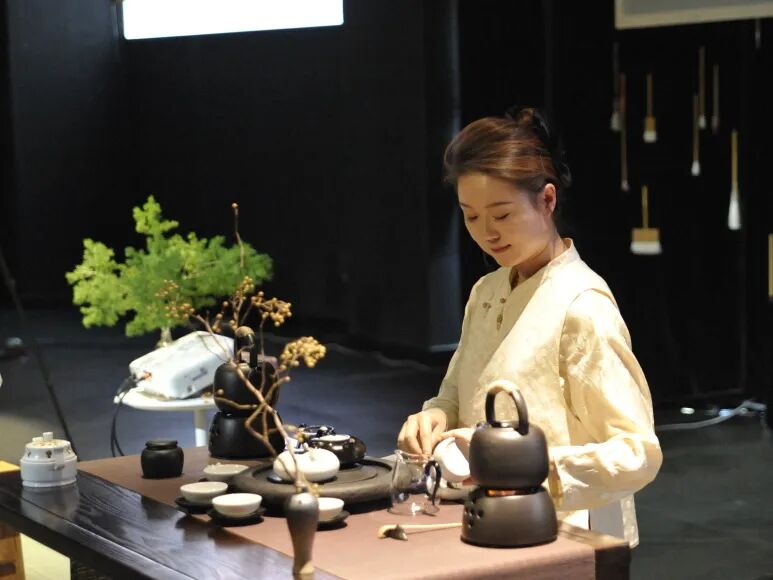
, tea art, tea, tea is not embellishment, but rhythm-let the body enter the “slow”
first. Dialogue: How does literati music participate in physical and mental adjustment?
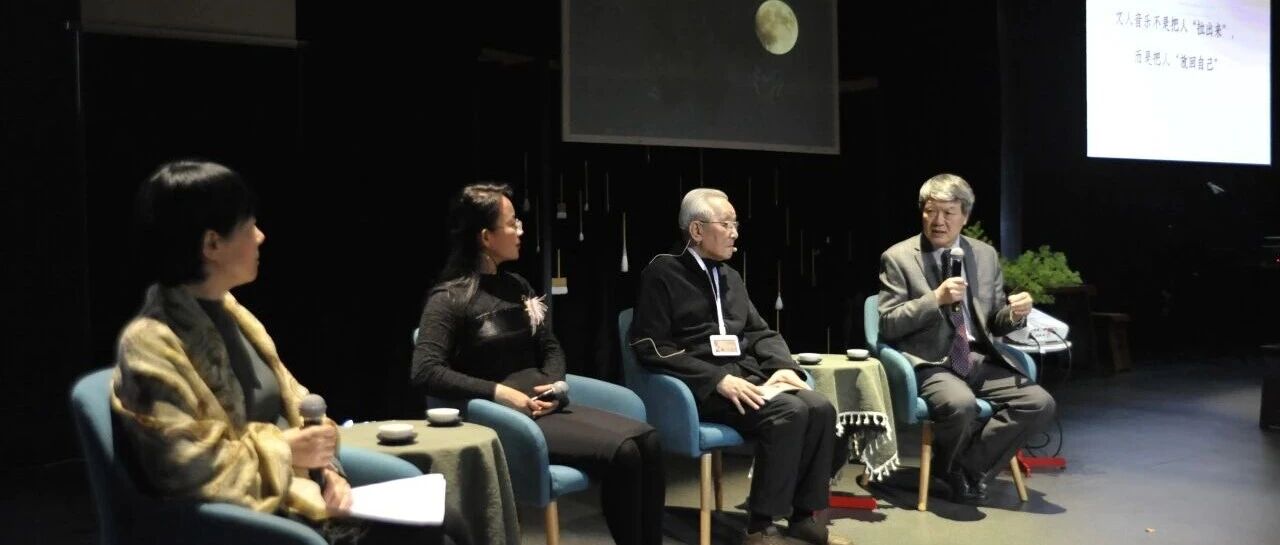
After the tea artist served tea to the four guests and everyone took their seats, the salon entered the only language-intensive period in the audience-dialogue. Dr. Huang Juan first asked the question:“Why do literati need music?” “
1) The functional positioning of literati music: In addition to expression
, Mr. Wu Wenguang, a guqin artist who is “settled”, pointed out that in the Chinese literati music tradition, the function of the guqin is not limited to emotional expression, but more importantly, self-cultivation, tranquilization and introspection.。 What Qinyin settles in is not only the individual’s emotional state, but also the structure of the relationship between man and himself, man and others, and man and nature.
He also emphasized that all ethnic groups in the world have their own unique musical traditions. From the perspective of musicology and anthropology, the origin and function of music are highly diverse and cannot be attributed to a single path.
2) Understanding “adaptation” from the structure of Qin rhythm: slow, empty, blank space and breathing coupling
From the perspective of qinology and Qin rhythm,Associate Professor Quan Linhong further pointed out that Guqin can assume the function of “adjusting the mind” and is closely related to its musical structure-including slow rhythm, a lot of blank space, and uneven intervals.The time organization method, as well as the sound generation mechanism that is highly coupled to the player’s breathing. These characteristics do not continue to “capture” attention, butreduce auditory significanceand provide space for inner psychological activities, so they have a potential psychological adjustment effect.
3) The perspective of auditory neuroscience: Cross-cultural neural commonalities and research boundaries
From the perspective of neuroscience, Professor Wang Xiaoqin, Director of the Brain and Intelligence Laboratory of Tsinghua University and Chief scientist of the major cross-cutting special project on Music and Brain Science of the National Natural Science Foundationof China, combined with the laboratory’s research on the neural coding of the basic elements of music, pointed out that although musicThe question of origin is inconclusive, but in the evolution of humans and primates, the encoding mechanisms of time, pitch and timbre in the auditory cortex are highly similar. This fact determines that there are certaincross-cultural neural commonalities in human musical perception.
At the same time, how to establish an experimental paradigm without damaging the integrity and ecological validity of music is still an important challenge in music brain science.
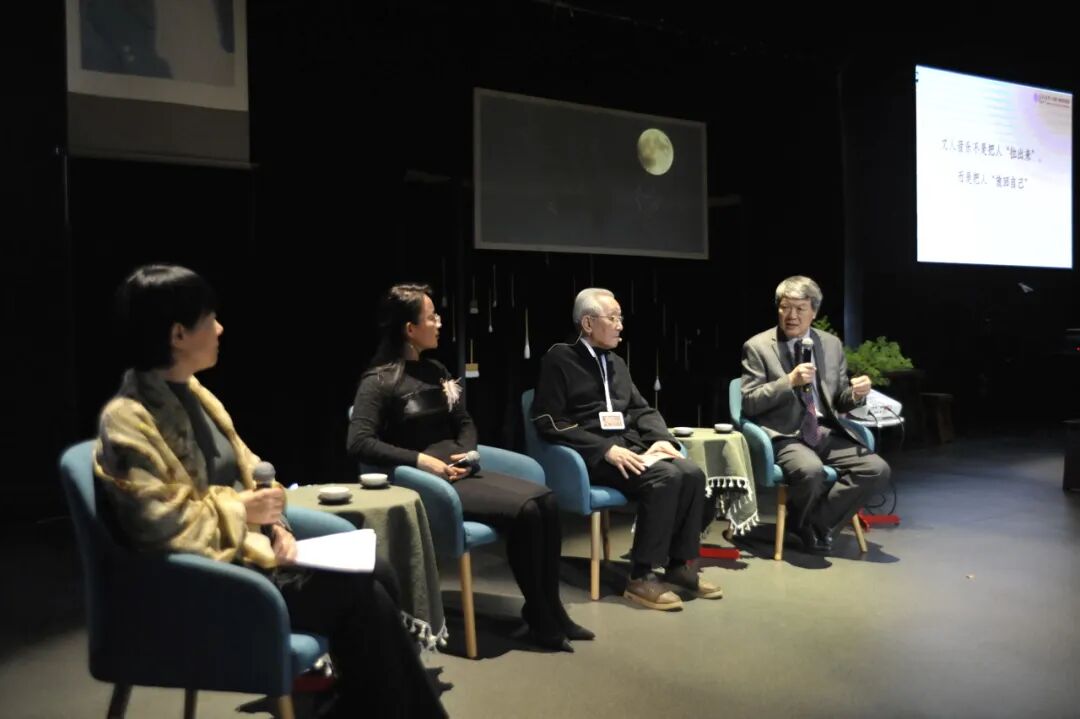
Guest dialogue
When Art, Culture and neuroscience meet in the same space
3. “Three Layers of Yangguan”: Music as an emotional process rather than the core passage of emotional stimulation
dialogue, focusing on how literati music participates in the long-term adjustment of complex emotions.
Mr. Wu Wenguang pointed out that the repeated singing and playing of “Three Layers of Yangguan” by literati is not a one-time emotional catharsis, but more like a kindof psychological practice that can be repeatedly entered, completing the sorting and accumulation of emotions in the continuous return. Associate Professor Quan Linhong combined with the history of Qin to point out for example that when Su Dongpo said goodbye to his friends three times in his life, he played and sang and adjusted “Three Layers of Yangguan”. This kind of ”repetitive but not completely repetitive” practice is not simply reproduced, but allows music to participate in the phased transformation of emotions at different stages of life. The wide spread of “Three Layers of Yangguan” among the literati of the Tang and Song Dynasties is also reminiscent of the popular mechanism of “popular songs” in contemporary society.
From the perspective of neuroscience, Dr. Huang Juan pointed out that such structures may involvepredictive renewal, emotional regulation, and collaborative regulatory mechanisms of the prefrontal—limbic system. The meaning of “triad” is not to strengthen emotions, but to promote the natural completion of the mental state centered on introspection and self-recollection. Professor Wang Xiaoqin further added: From the level of neural mechanisms, it is very likely that the ancient “popular songs” and the modern “Divine Comedy” share certain neural foundations related to emotional regulation, but the cultural context and form are different.
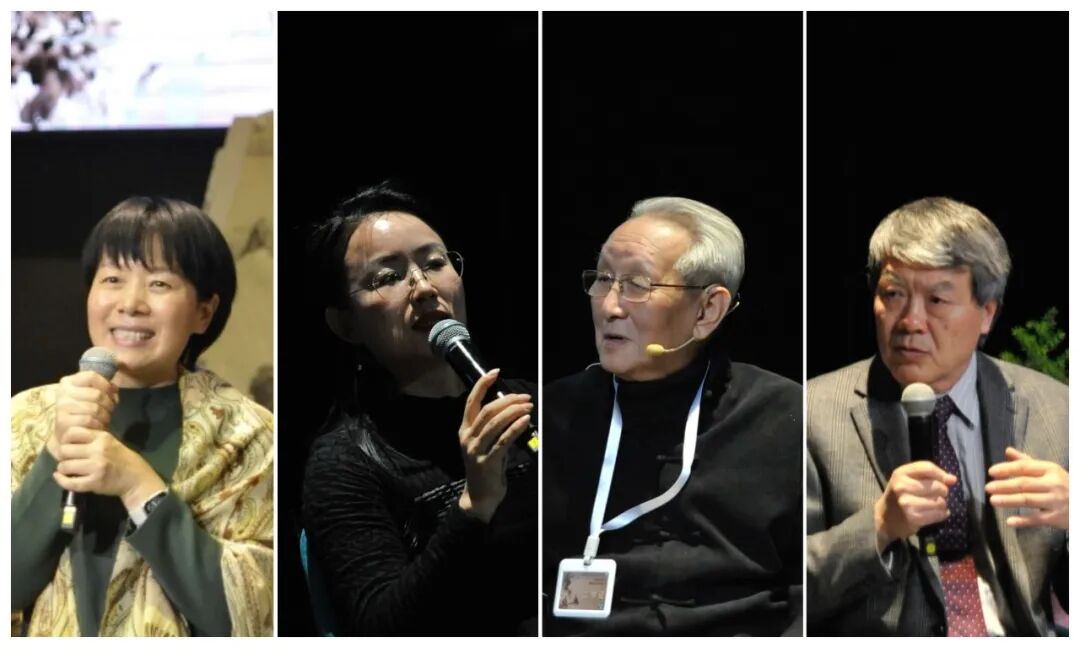
From left to right: Huang Juan, Quan Linhong, Wu Wenguang, Wang Xiaoqin
, “Slowness” and “emptiness”: The physiological basis behind aesthetic judgment
revolves around the “slowness”, “emptiness” and “blankness” that exist in a large number of literati music. The discussion is further in-depth.
Mr. Wu Wenguang believes that this kind of music practice, which seems “abnormal” in a contemporary fast-paced society, is actually fighting external restlessness and protecting internal rhythm, which may release emotions and form energy accumulation. Associate Professor Quan Linhong shared the historical record of Ouyang Xiu’s recovery from depression to calmness and pleasure by playing the Guqin, and pointed out that it was the personal experience of physical and psychological changes during the long-term Fuqin process that prompted her to develop a continuous interest in neuroscience.
In this regard, Professor Wang Xiaoqin responded from a scientific research perspective: the effect of music on the human body and mind must go back to the brain itself to find evidence. One of the important goals of the research of ”Music brain Science” is to systematically study the mechanism of music in emotional regulation and psychological intervention under the framework of evidence-based medicine, and explorepersonalized music intervention paths based on brain scientific evidence.
5. Music returns to music: performance is the research site (EEG + fNIRS + physiological multimodal collection)
For the laboratory, this salon is not a “cultural activity other than scientific research.” After the dialogue, language withdrew, and music once again became the only protagonist-and it also became an important scene for laboratory research.
During the entire performance, the laboratory team carried out multi-modal data collection
simultaneously: · 4 live audienceswore the EEG +fNIRS composite system and a number of physiological sensors to continuously record theirbrain activity changes, body reactions and neural network switching in the real literati music environment.
· Two musicians-young Guqin playerSun Haopengand flute playerFan Linfeng-wore fNIRS during the performance to record cortical blood oxygen changes in the real performance state. The team plans to synchronize and align the player’s brain response with the music structure and performance behavior to tryto decipher the psychological and cognitive states(such as attention allocation, execution control, automatic generation, emotional regulation, etc.) in the performance process.
This design makes this salon a live research practice that covers “listener—player” at the same time: we not only care about how music acts on the listener’s brain, but also how music is generated in the player’s body and brain.
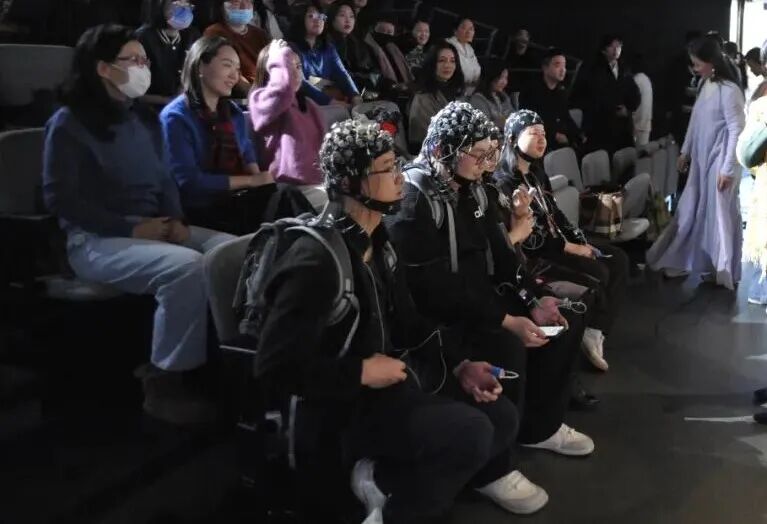
The audience wears EEG/fNIRS/physiological sensors
. 6 audience members participate in multi-modal recording: brain activity, body response, and network switching are collected synchronously
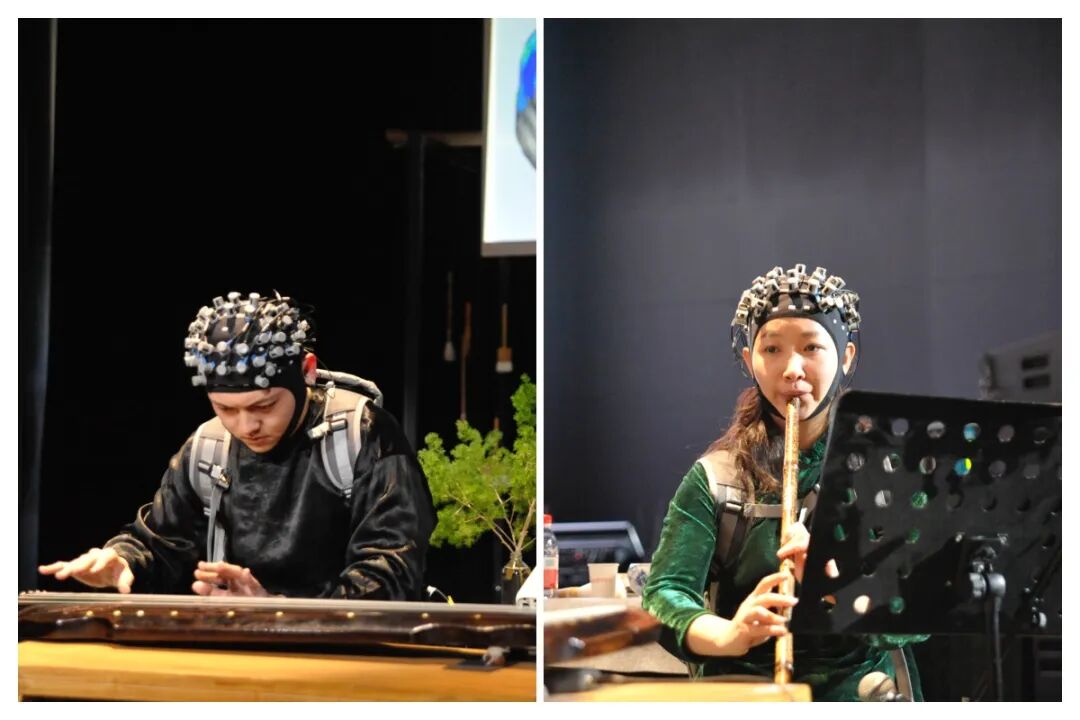
. The player wears fNIRS to play (Sun Haopeng/Fan Linfeng)
The player is also “being recorded”-we try to decipher the psychological and cognitive state in the performance.
6. Four tracks: A recordable “psycho—neural experience trajectory”
performance is run through by Mr. Wu Wenguang with a funny and vivid explanation, and the tracks unfold in turn:
“Flowing Water”: The encounter of “High mountains and Flowing Water” in the Boyazi period; Mr. Wu Wenguang wrote “High Mountains and Flowing Water” on the spot., forming a multi—modal auditory-visual-motor resonance;
“Wuye Wuqiu Feng”: composed by Mr. Wu Wenguang’s father, Mr. Wu Jingluo, and innovatively promoted, highlighting the inheritance and physical memory of Yushan Wu School pedagogy;
“Three Layers of Yangguan”: Let the audience experience the ancient literati again.The parting and emotional return;
“Smoke and Rain in the Bamboo Forest”: The contemporary works of Wu Ye, the daughter of Mr. Wu Wenguang, suggest the generative, continuity and future of literati music.
In the complete music experience, the audience returns to the issues just discussed. After the performance, Mr. Wu Wenguang presented the “High mountains and Flowing Waters” written by himself to Professor Wang Xiaoqin, which symbolized that when the guqin meets science, it is also a kind of “soulmate encounter” in the modern sense.
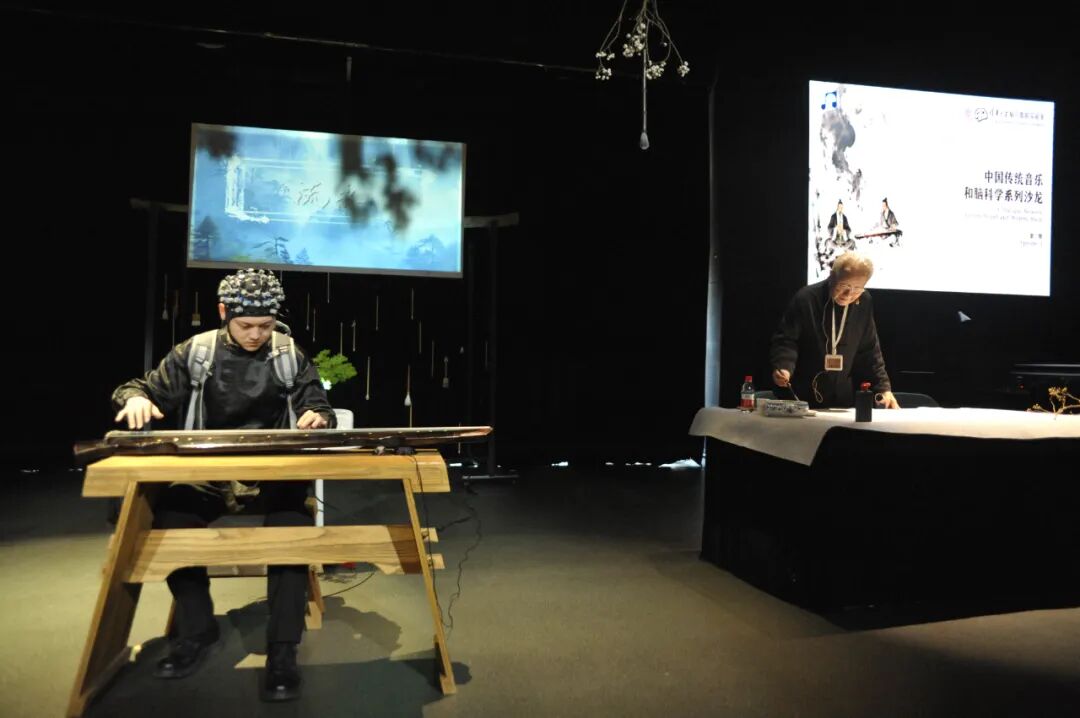
“Flowing Water” is synchronized with calligraphy: hearing, vision, and movement jointly construct the “encounter of Soulmates” and
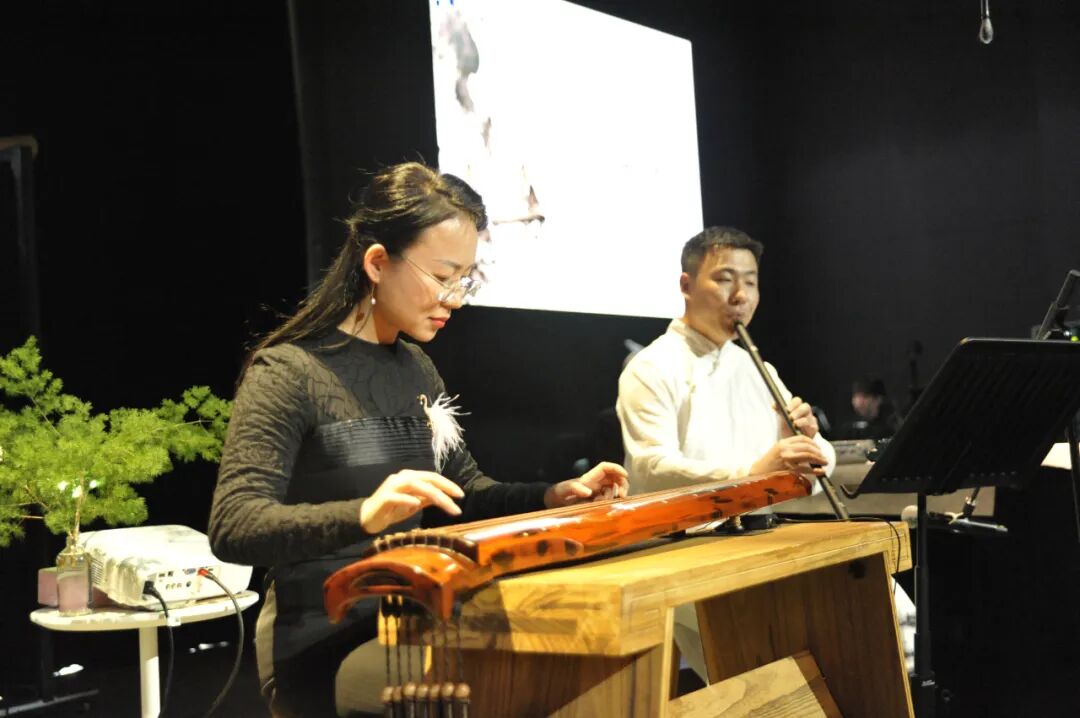
“Wuye Dance Autumn Breeze” ensemble
Quan Linhong (Guqin); Che Fang (Xiao)
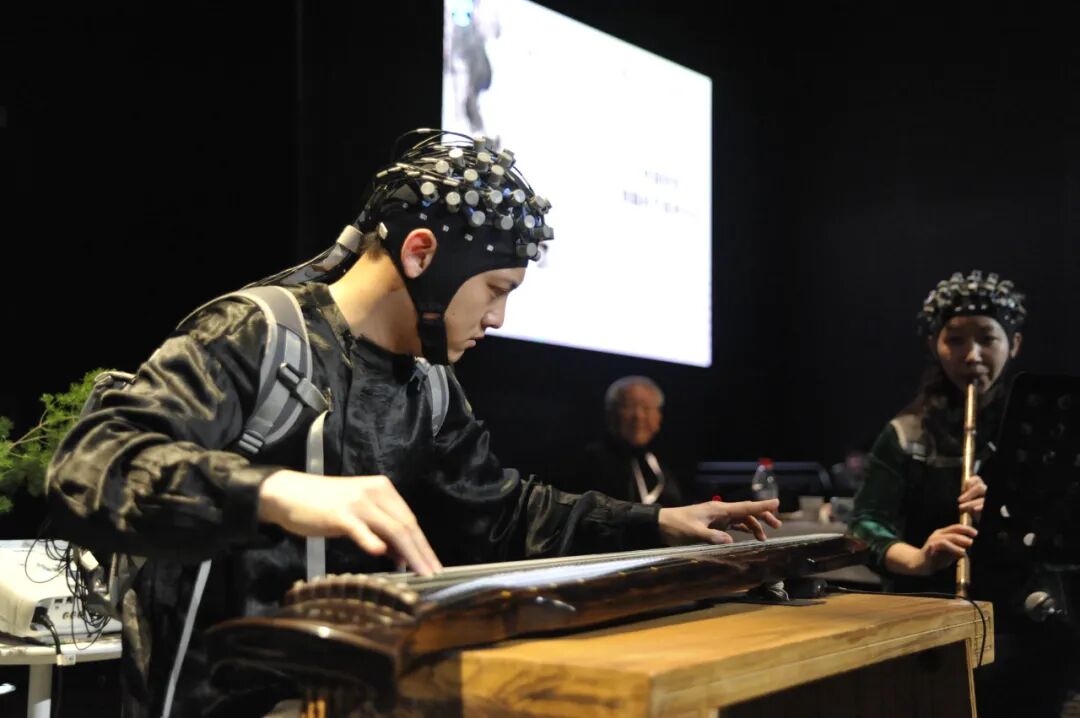
“Bamboo Forest Smoke and Rain” ensemble, Sun Haopeng (Guqin), Fan Linfeng (Xiao)
, traditional Chinese styleCompletion state, but generation state: Contemporary works continue the future of literati music
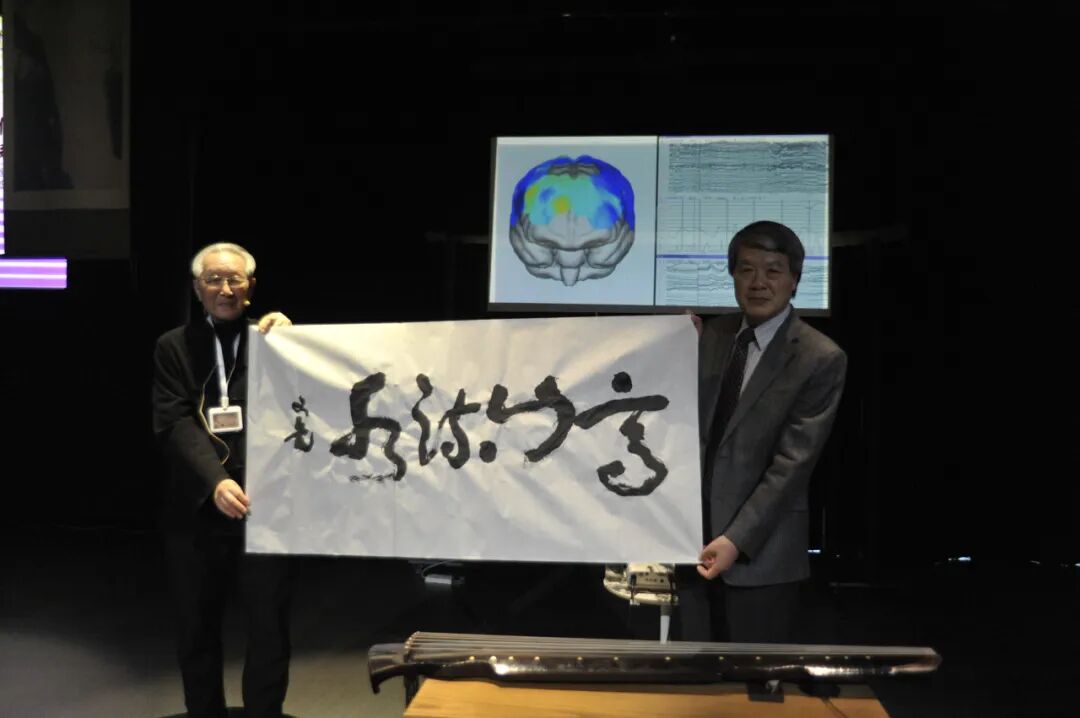
When Guqin meets brain science, a “high mountain and flowing water” in the contemporary context
7. Laboratory summary: From music practice to scientific issues
In his summary, Dr. Huang Juan pointed out: “Literati music does not ‘pull people out’, but ‘puts people back into themselves’. ”In a low-density, low-significance music environment, the individual’s attention resources shift from external stimuli to internal processes, breathing tends to stabilize, and the predictive load is significantly reduced. People are more likely to enter a low-wake-up, “empty”-like state: at this time, the default mode network activity is enhanced, while the network activity related to control and significance is relatively weakened.
At the end of the dialogue, the guests summarized their views in one sentence: Mr. Wu Wenguang emphasized that the development of civilization has always been accompanied by mutual learning and integration; Associate Professor Quan Linhong called on more people to experience the physical and mental adjustment function of the guqin firsthand; Professor Wang Xiaoqin shared his understanding of music: “Music is created by the human brain.It also exists for the human brain. “
8. The epitome of a cross-cutting scientific practice
. The successful holding of this salon is inseparable from the joint efforts of the music brain science team of the Brain and Intelligence Laboratory of Tsinghua University. The team members come from the Departments of Mathematics, Computer Science, and Electronic Engineering of Tsinghua University, the Department of Psychology of Peking University, the Department of Computer Science of the Hong Kong University of Science and Technology, the Department of Computer Science of Xi’an University of Liverpool, and the Central Conservatory of Music. They have a solid interdisciplinary background.
As one audience member commented: “The conversation between scientists and artists is very romantic and an extremely wonderful experience. ”
Mr. Wu Wenguang has expressed many times in the exchange that he hopes that art and science can establish a closer cooperative relationship. Professor Wang Xiaoqin also thanked Mr. Wu Wenguang for his support and looked forward to working together in the future to promote in-depth cooperation between literati music and brain scientific research.
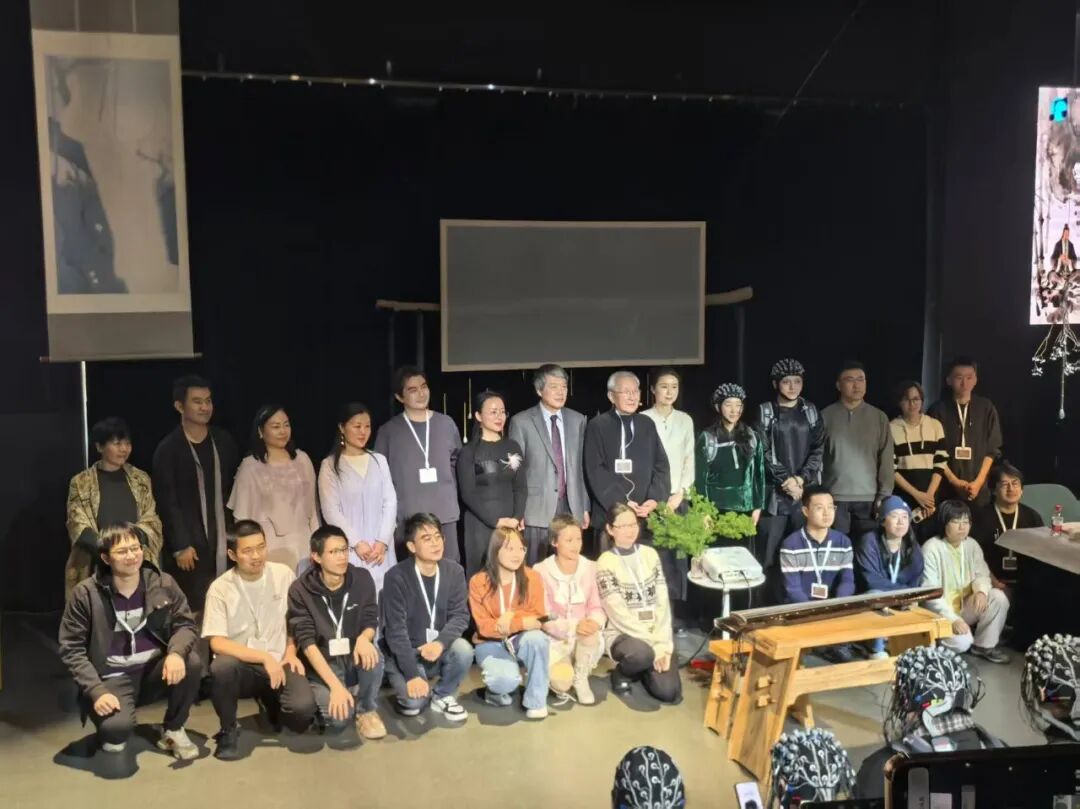
As the starting point of the public communication and research paradigm
, this is not only the end of an activity, but also the starting point of a research paradigm and public communication method. Literati music does not pull the listener to external stimuli, but guides it into self-introspection. This may be the important inspiration that traditional Chinese music provides for contemporary brain science.
What we study is not what music “is”, but how music changes the relationship between the brain and people in real life.
Leave a Reply