
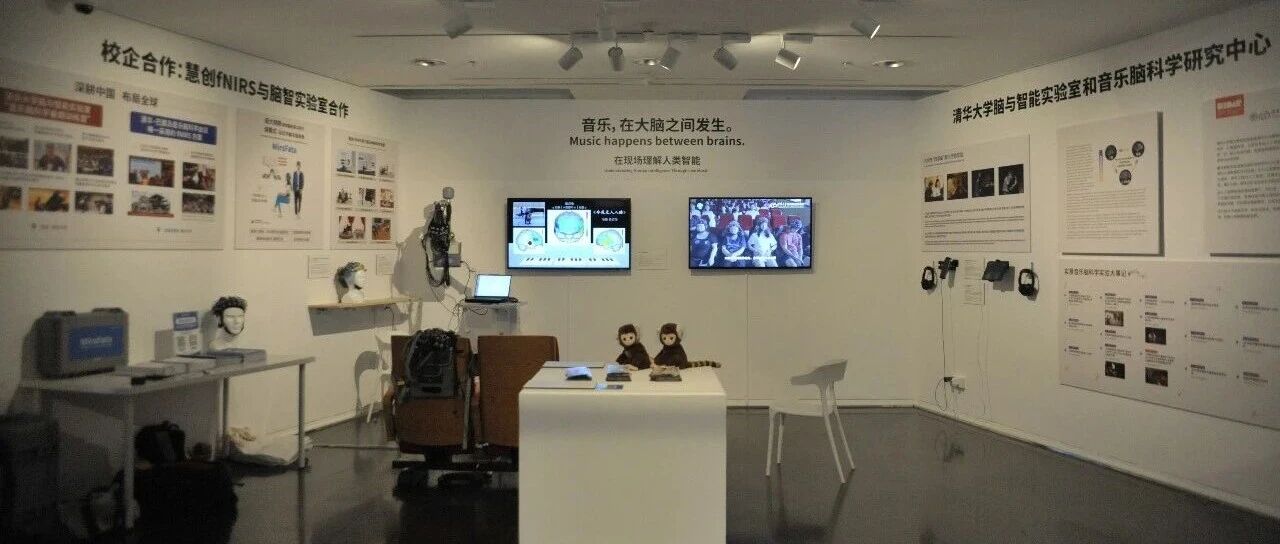
On April 30th, the Art and Technology Industry Innovation and Development Seminar (FIDAT) was held at the Art Museum of Tsinghua University. Professor Wang Xiaoqin, director of the Brain and Intelligence Laboratory of Tsinghua University, was invited to deliver a keynote speech at the main forum. At the same time, the research results of the Music Brain Science Research Center of the Brain and Intelligence Laboratory appeared in the theme exhibition-“Art and Science Symbiosis: Art and Technology Industry Innovation Achievement Exhibition”, participating in the cutting-edge exploration of the integration of art and technology from the perspective of neuroscience.
Listening to Intelligence: Understanding Human Intelligence through music
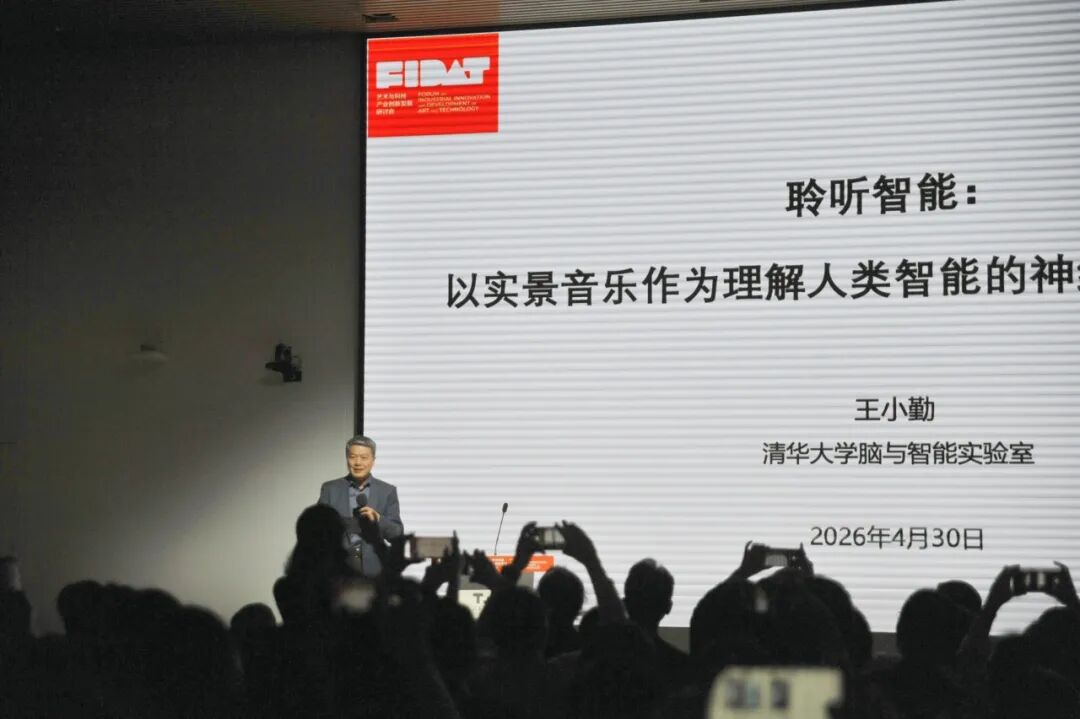
At the main forum, Professor Wang Xiaoqin delivered a speech on the topic of “Listening to Intelligence: Using Real Music as a Neuroscience Research Paradigm for Understanding Human Intelligence”.
The speech pointed out that music experience is not a simple auditory process, but a cognitive activity that unfolds in time and is deeply embedded in social interaction. Based on this understanding, the team proposed to use “real music” as the research paradigm to explore how humans generate perception, emotion and aesthetics through sound through brain science and multi-modal experimental research methods in real performance situations.
In the context of artificial intelligence gradually acquiring the ability to generate music, Professor Wang Xiaoqin proposed that the uniqueness of human intelligence lies not in the ability to generate music, but in the organization of experience, the understanding of meaning and its shared construction in social situations. Understanding how humans experience and share music is becoming the key to understanding the nature of human intelligence. This perspective provides a new research path for the integration of art and science in the era of artificial intelligence.
Musical brain science Experiment in an art museum
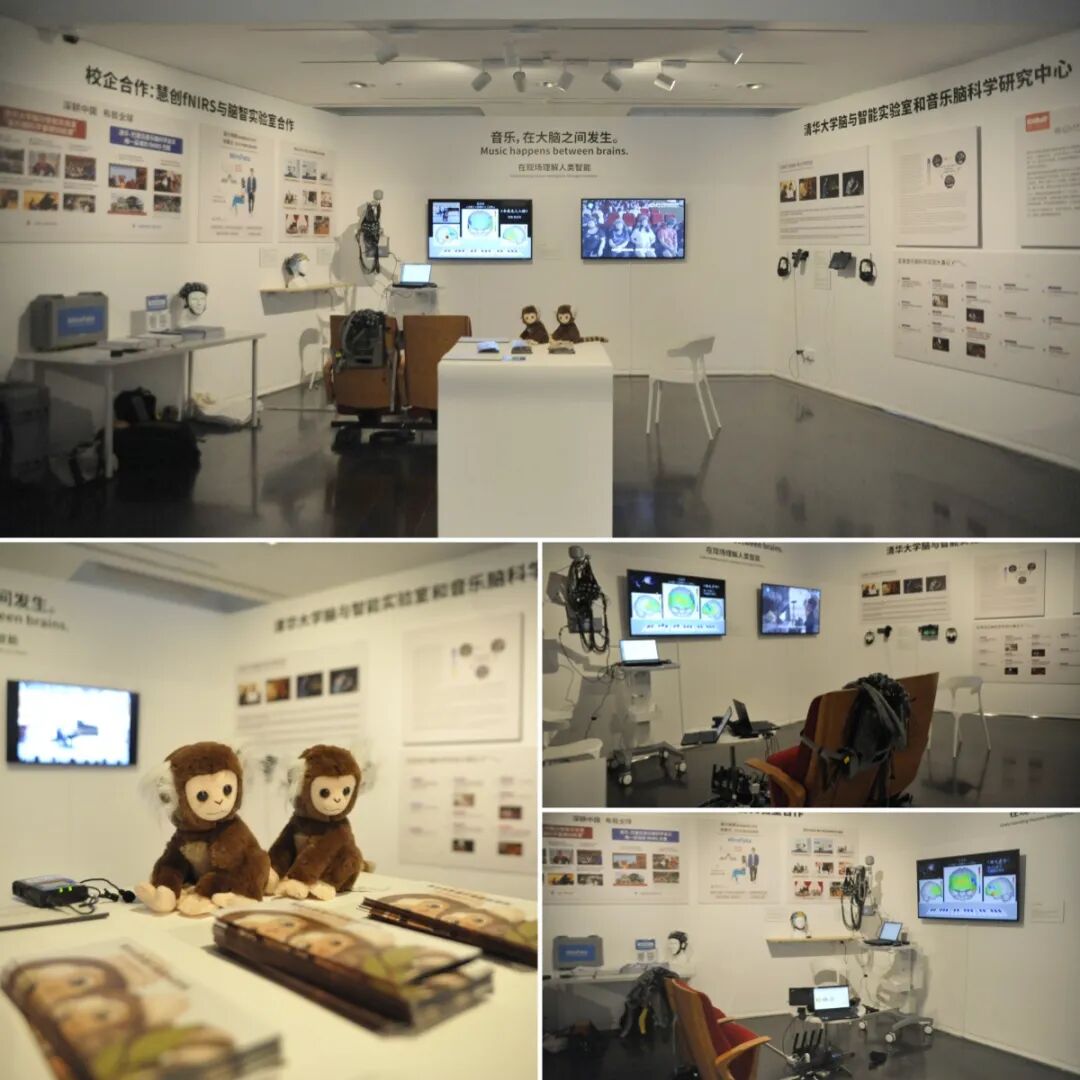
As a supporting exhibition, “Art and Science Symbiosis: Art and Technology Industry Innovation Achievements Exhibition” will be on display simultaneously in Hall 14 on the fourth floor of the Tsinghua University Art Museum (April 30 to May 6, 2026). The exhibition is guided by the China Federation of Literary and Arts and hosted by Tsinghua University. It brings together the achievements of universities, scientific research institutions and industries. It focuses on the dimensions of experience, efficiency, culture and space, and presents a variety of practices for the integration and development of art and science and technology.
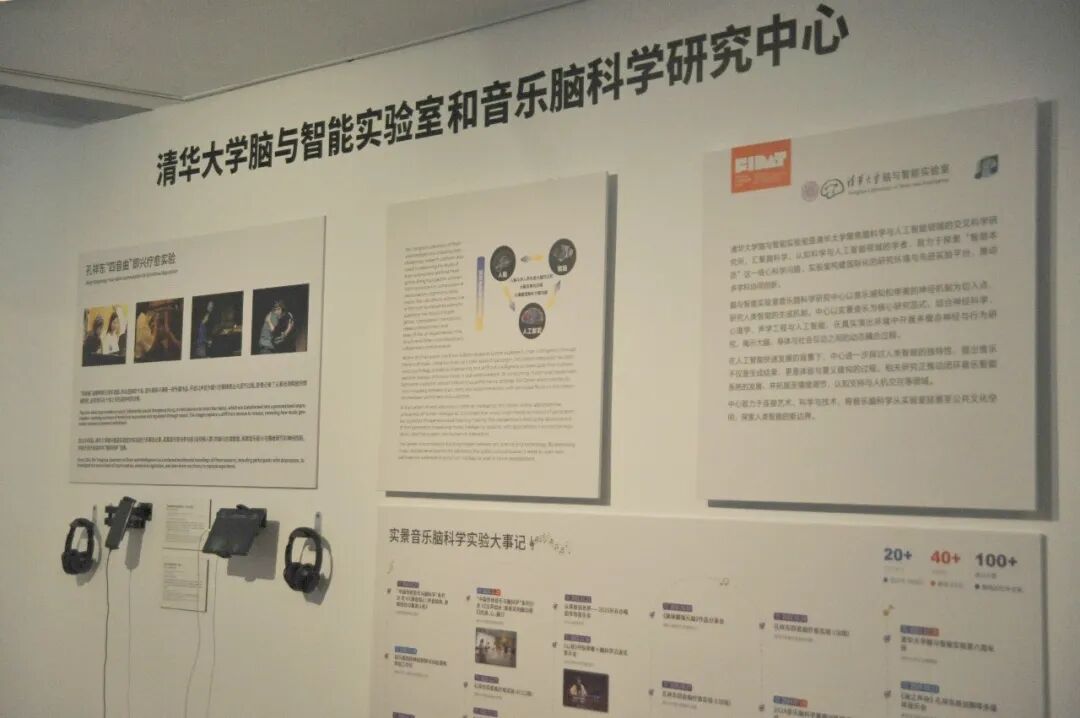
The Music Brain Science Research Center of the Brain and Intelligence Laboratory, as one of the participating scientific research institutions, demonstrated its research progress in the field of music brain science, including the “four-tone music” impromptu healing experiment in cooperation with the artist Mr. Kong Xiangdong, and the near-infrared brain function imaging (fNIRS) technology with Huichuang Medical.The results of cooperation in this regard.
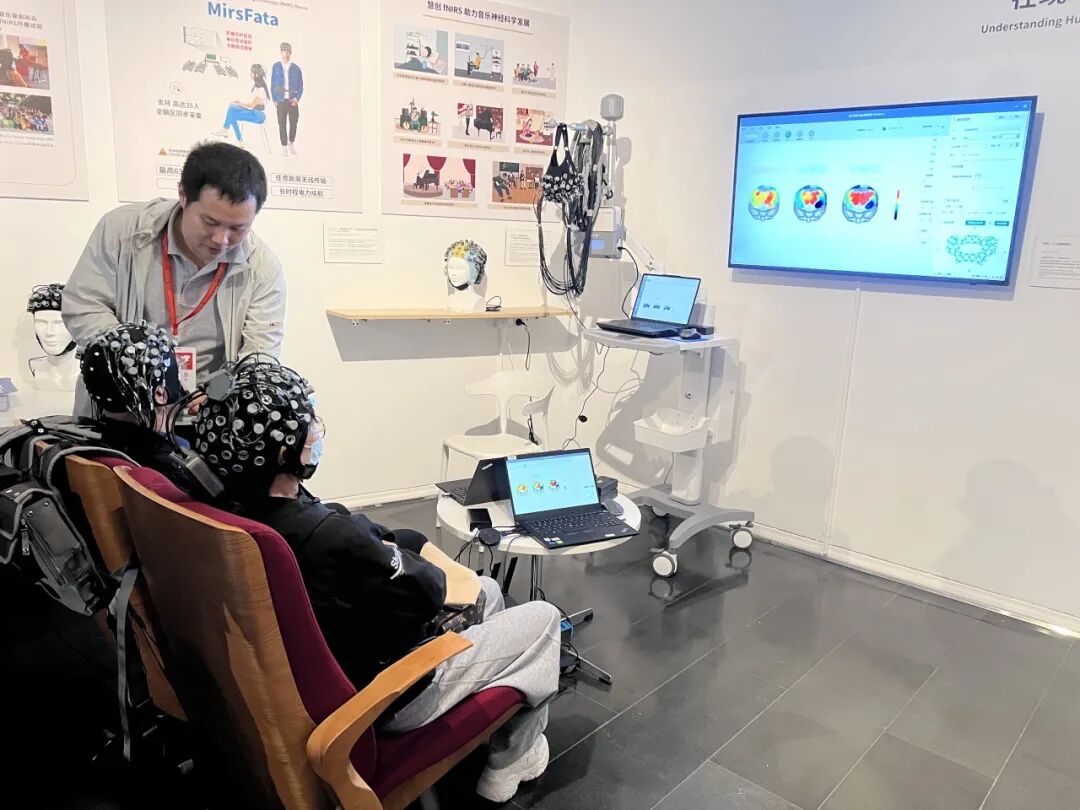
The exhibition area has specially set up a “live music brain science experiment site” to directly introduce experimental research into the public space. The audience can experience brain imaging equipment on the spot and feel the neural response during music listening, so as to intuitively understand how music acts on the brain and emotions.
About the Brain and Intelligence Laboratory of Tsinghua
University and the Music Brain Science Research Center
The Brain and Intelligence Laboratory of Tsinghua University is an important platform focusing on the cross-cutting research of brain science and artificial intelligence. It brings together scholars in the fields of neuroscience, cognitive science and artificial intelligence to answer the core question “What is intelligence”.
On this basis, the Music Brain Science Research Center takes live music as the core research paradigm, conducts multimodal neural and behavioral research in real situations, and explores the dynamic coupling mechanism between brain, body and social interaction. Research emphasizes that music is not only the result of generation, but also the process of experience and meaning construction. In addition, the team actively incorporates traditional Chinese music into its research vision and promotes relevant international exchanges and cooperation.
The Center is committed to connecting art, science and technology, expanding music brain science from laboratories to public cultural spaces, and exploring new boundaries of human intelligence.
Exhibition information
Symbiosis of Arts and Sciences: Exhibition of Innovative Achievements in the Art and Technology Industry Exhibition
Time: April 30 to May 6, 2026
Venue: Exhibition Hall 14, Fourth Floor, Tsinghua University Art Museum
Opening Hours: 9:00-17:00 (Stop at 16:30) Admission
Tickets: Tsinghua teachers and students with campus cardsTickets are free; social audiences need to purchase tickets, please
refer to the official website for details:
https://www.artmuseum.tsinghua.edu.cn
Contribution | Edited and typeset by Huang Juan and Shen Yiyang&
nbsp;/
Reviewed by Gao Jing / Wang Xiaoqin, Guan Weijie
Leave a Reply