
From October 17 to 19, 2025, the China International Digital Economy Expo was successfully held at the Shijiazhuang International Convention and Exhibition Center (Zhengding). The Tsinghua Laboratory of Brain and Intelligence was invited to exhibit.
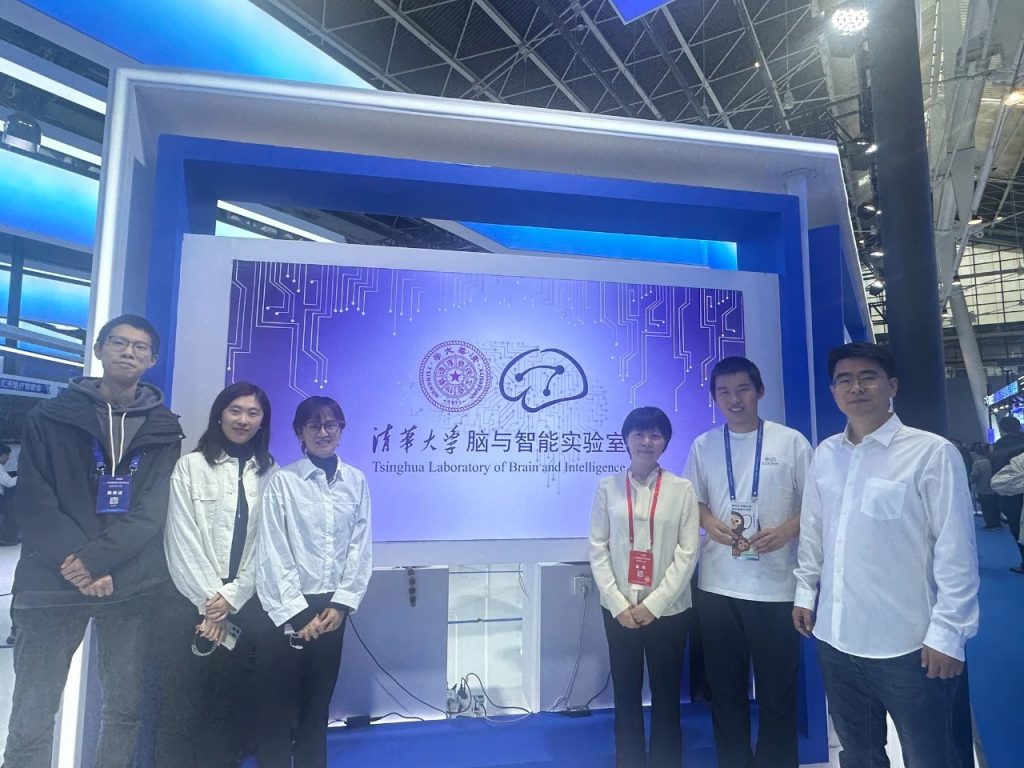
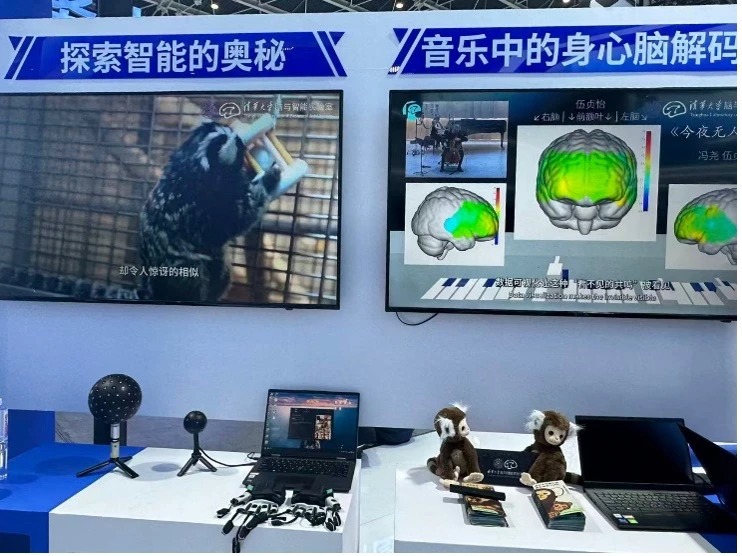
The Laboratory of Brain and Intelligence’s exhibition was centered around two main themes: “Exploring the Mysteries of Intelligence” and “Decoding the Mind, Body, and Brain in Music.”
The “Exploring the Mysteries of Intelligence” module systematically introduced the importance of the marmoset as a research subject in brain science from multiple perspectives, including: getting to know the marmoset—a “social expert” from the tropical rainforest; explaining the advantages of the marmoset as an ideal model for brain research; introducing the construction and development of Tsinghua University’s Non-Human Primate Research Center; and exploring the common origins of intelligence development from marmosets to humans. As one of the most promising non-human primate model animals in the current international brain science field, the marmoset provides a unique window into understanding the biological essence of intelligence. The Laboratory of Brain and Intelligence started from scratch and built the first non-human primate research center in Tsinghua University’s history. This center integrates marmoset breeding and rearing, behavioral and cognitive research, brain functional imaging, and transgenic model development, providing systematic support for exploring the major scientific question of “the nature of intelligence” from 0 to 1.
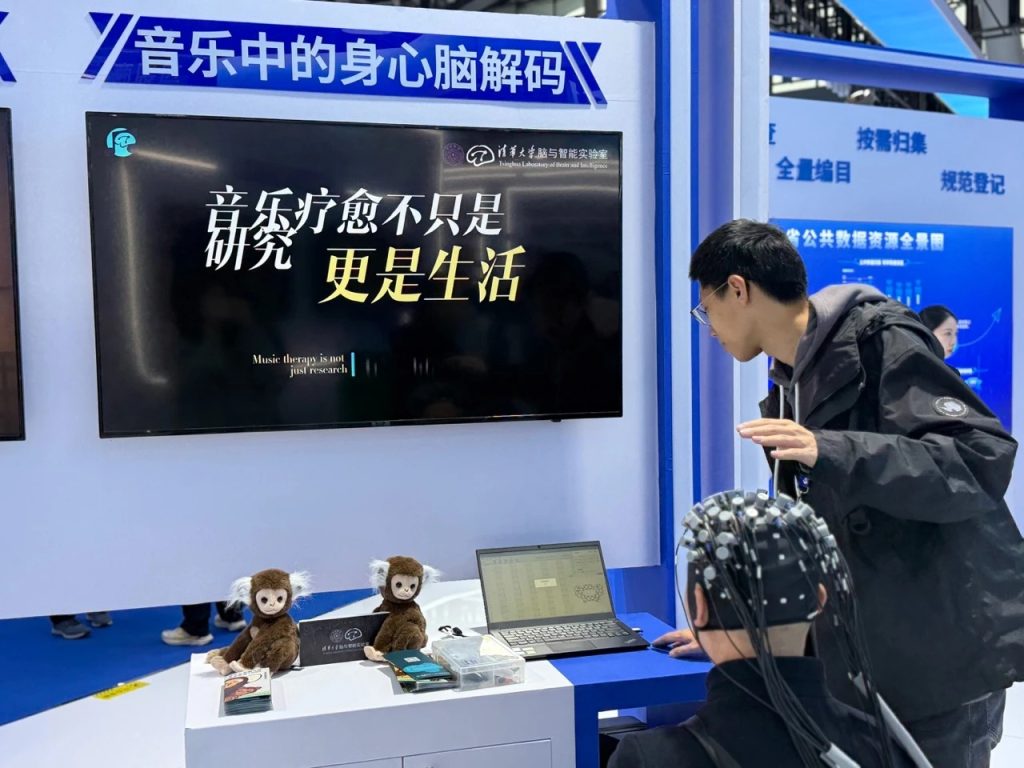
The “Decoding the Mind, Body, and Brain in Music” module focused on the emerging interdisciplinary field of music neuroscience, introducing the closed-loop music intelligence system being developed by the Music and Brain Science team at the Laboratory of Brain and Intelligence. This system collects brain and body data in real-life scenarios to decode an individual’s internal mental state, generates personalized music prescriptions based on the user’s emotional and perceptual responses, and then feeds the customized music back to the user, thereby achieving an “adaptive and personalized” regulation of mind and body state. This innovative model will empower the development of future intelligent agents.
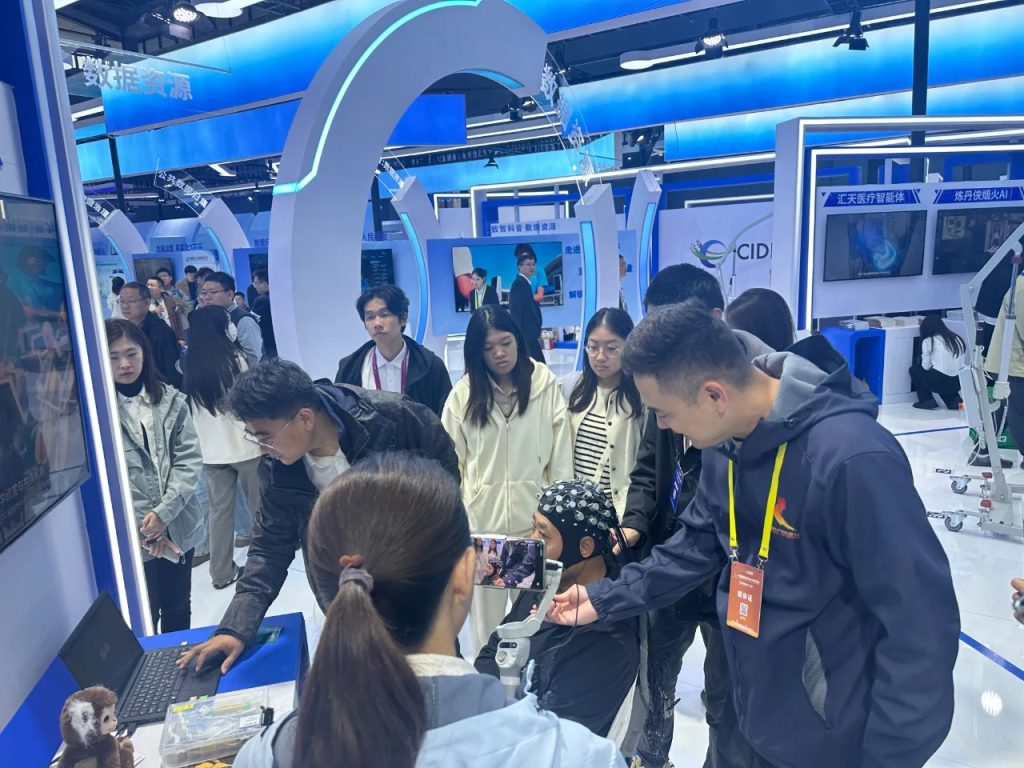
Through video displays and experimental instruments, the Laboratory of Brain and Intelligence’s exhibition comprehensively presented its cutting-edge scientific research and future application potential from both basic research and industrial application perspectives. The booth attracted a large number of attendees interested in the fusion of art and science for interactive exchanges. The specially set up fNIRS (functional Near-Infrared Spectroscopy) experience area, which could monitor the blood-oxygen activity of the participant’s cerebral cortex in real time, allowed participants to personally experience the unique charm of technology as a tool for self-cognition, thus receiving widespread attention from visitors.
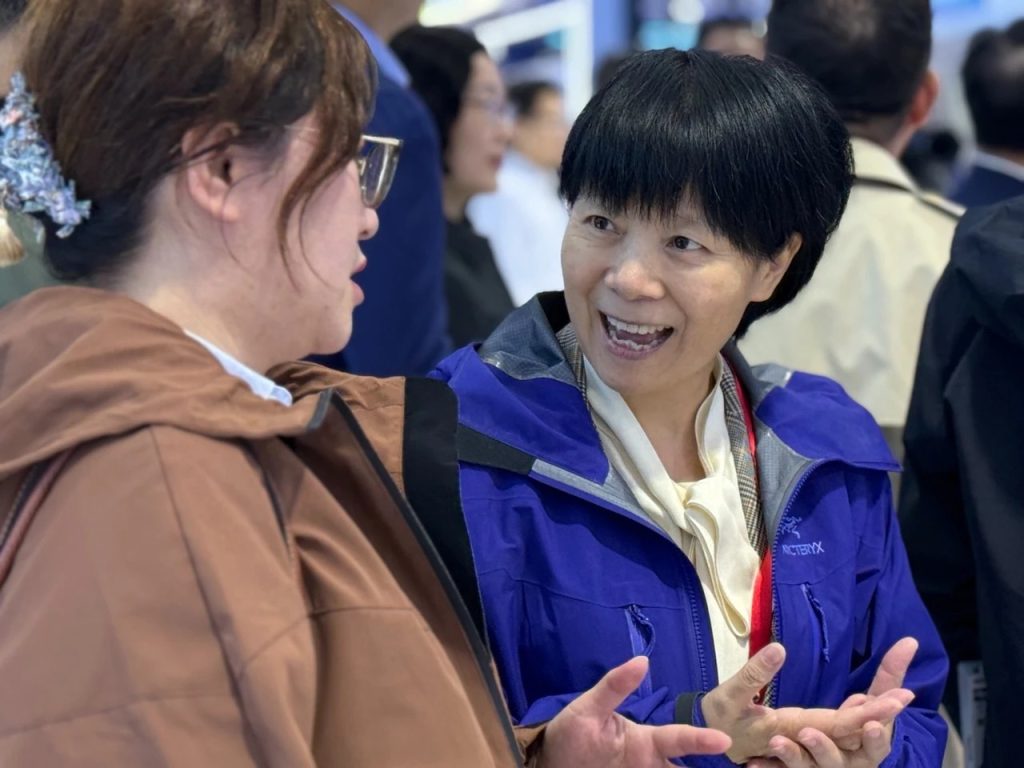
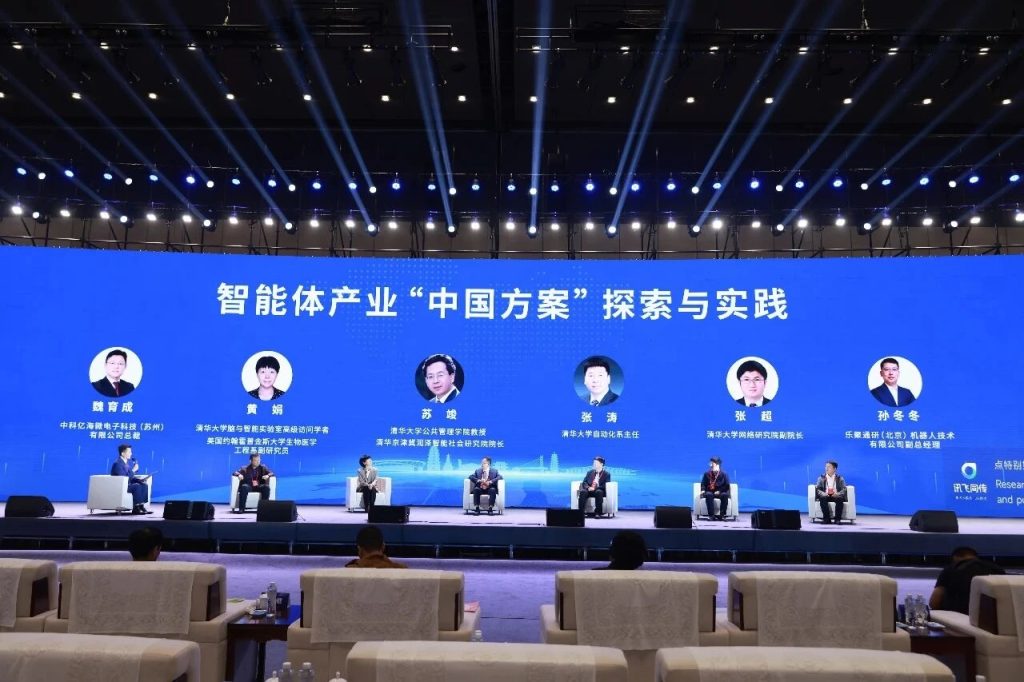
During the expo, Dr. Huang Juan, head of the Music and Brain Science team at the Tsinghua Laboratory of Brain and Intelligence, was invited to attend the roundtable conference on “Intelligent Agent Industry Ecosystem and Development.” At the meeting, she engaged in in-depth discussions with several guests from industry and academia on topics such as exploring a “Chinese solution” for the intelligent agent industry, practical implementation paths, and its application prospects in the fields of “elderly care and child development.” Dr. Huang Juan pointed out that future intelligent agents need to possess emotional interaction capabilities, especially the ability to understand and respond to human emotions through music, thereby transforming from efficient tools into true companions who understand and accompany us.
This exhibition was not only an important showcase of achievements for the Tsinghua Laboratory of Brain and Intelligence but also a successful practice in actively promoting the popularization of scientific research to the public and engaging in dialogue with industry.
Leave a Reply